Tuesday, June 9, 2020

Books for Developing Empathy

In  our community there is not much opportunity for children to have direct interaction with children from other cultures or social/economical classes.  Yet our children will be our country's future leaders and it is important for them to understand what life is like for people all across our nation.  How can our children learn empathy for people who grew up very differently than they did?  Through books, of course!

Sometimes we feel reluctant to recommend books to our kids that might be too sad or frightening because they depict racial violence or cruelty. Here are some books for older grade school and junior high that have a lighter touch, but still show what it is like to grow up in a different environment.

New Kid by Jerry Craft
Jordan is going to a new school for the first time.  He is from the Bronx, but his new school is a private school uptown.  Jordan experiences subtle acts of prejudice, but eventually makes friends with two other boys who each have their own reasons for feeling like outsiders.
GN CRAFT

Other Words for Home by Jasmine Warga
Jude lives in Syria with her parents and older brother.  When the war gets a little too close to home, Jude and her mother travel to America to stay with Jude's uncle until it is safe to return. Jude has always loved American movie stars, but living in America is full of challenges Jude didn't expect. As she struggles with ESL and prejudice because of her decision to wear a hijab, she wonders if her dream of being in the spotlight could ever come true.
I FIC WARGA
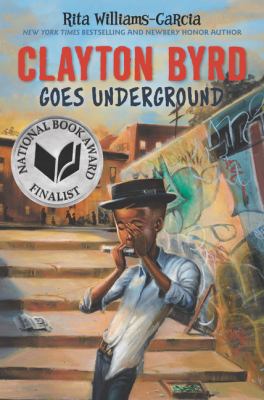

Clayton Byrd Goes Underground by Rita Williams-Garcia
Clayton loves it when he can sneak away with his grandfather, Cool Papa Byrd, and jam with the Blues Men in Washington Park.  Then one day, he grandfather is gone. Clayton's mother and grandfather never got along, and when Clayton's mother takes his last memento of his grandfather, Clayton decides to run away and join the Blues Men on the road. Thus begins his adventure in the rich musical culture of New York's underground.
J FIC Williams-Garcia


The Epic Fail of Arturo Zamora by Pablo Cartaya
Arturo and his large extended family live in a small town in Florida.  When their family run restaurant is threatened by a developer who wants to put up high rise apartments, Arturo, his family, and his new found friend, Carmen, find strength from the words of Arturo's grandparents, and the Cuban Poet, Jose Marti, to face the threat to their family business.
I FIC Cartaya


Tuesday, May 5, 2020

Brandon Sanderson (By Teens/For Teens)

I fell down the Brandon Sanderson rabbit hole last year after a friend recommended I read Alcatraz versus the Evil Librarians. Let’s just say I’ve never been able to recover.
Now, some of you might be asking, “Who the heck is Brandon Sanderson?”
I’ll give you the brief run-down:
Brandon Sanderson is the author of over twenty novels in the SFF genre. He is most well-known for his Cosmere universe (Mistborn, The Stormlight Archive, Elantris, etc.) and finishing Robert Jordan’s high fantasy series The Wheel of Time. His first published novel was Elantris in 2005. He is a fifteen time New York Times best-selling author. He also lives in Utah.
If you’re interested in joining me in the hole but don’t know where to start, I have a few recommendations to make.

Alcatraz Versus the Evil Librarians
So there I was, tied to an altar made from outdated encyclopedias, about to get sacrificed to the dark powers by a cult of evil Librarians.”
If that opening line above doesn’t pique your interest, I don’t know what will.
The concept of this book is so fun. It takes superhero fiction and turns it on its head by asking, “What if the superheroes had everyday powers like being late, tripping, or breaking things?”
This series is what got me hooked on Sanderson. It’s fast-paced, witty, and really wacky. If you enjoy writing from authors like Brandon Mull, Rick Riordan, or Lemony Snicket, I think you’ll be right at home with this series. It’s a great place to start.


Skyward
You get to choose who you are. Legacy, memories of the past, can serve us well. But we cannot let them define us. When heritage becomes a box instead of an inspiration, it has gone too far.”
This series is a little more standard YA SFF fare. In describing the series, I think the author puts it best:
“How to Train Your Dragon but instead it's a girl who finds a spaceship and goes to Top Gun school. It's like a mashup between Top Gun and Ender's Game and How to Train Your Dragon with an old broken-down spaceship with a really weird personality.”

It’s got aliens, aviation, robots, space—the whole bit. If you enjoy books like Ender’s Game or The City of Ember, this series will be right up your alley. Books 1-2 are currently out with at least two more planned.

The Stormlight Archive
Life before Death. Strength before Weakness. Journey before Destination.”
I get chills just thinking about this series. To me, it’s Brandon Sanderson’s magnum opus: a truly epic fantasy with outstanding characterization, world-building, and plotting. I’ve never been a big fan of fantasy, but I think this series has converted me.
Because the series is so big (and it’s only going to get bigger: book 4 is coming out in November, with 10 books planned in total) it’s honestly kind of hard to describe.
It’s set on the planet of Roshar, a world ravaged by storm and war. Honor is dead. A slave fights a war, struggling to survive. A general leads his armies, trying to uncover the meaning behind the visions he receives. A young woman seeks training under the hands of a scholar, but only to eventually rob her in order to save her family. Ancient magic that was once lost appears to be returning along with an order of knights who betrayed humanity centuries ago.
So if you’re into that kind of stuff (and why wouldn’t you be? It’s way cool sounding), I wholeheartedly recommend this series.

__________________
If you are a teen and would like to contribute a book or author review, email librarydirector@highlandcity.org.

Friday, April 3, 2020

Singing with Preschoolers

At story time we teach that parents should Talk, Sing, Read, Write, and Play with their children every day to help them be ready to be good readers.  Why is singing important for early literacy?

Reading requires two skills, decoding and comprehension.  A child needs to be able to figure out what the word is (decoding) and what it means (comprehension). For example, you can sound out (or decode) the word "fresas" but if you don't know Spanish you may not know that it means "strawberries" (comprehension). Kids need both skills to be successful readers.

Singing helps with both these skills.  When we sing we naturally divide words into sound parts. Think of Twinkle, Twinkle, Little Star. "Twinkle" is one word, but in the song we divide it up into two parts, "Twin-kle".  Learning that words are made of sound parts is the first step to understanding that each letter in a word contributes a sound. Singing songs helps children be ready to learn to "sound out" words as part of decoding.

Twinkle Twinkle Little Star is also a good example of how singing helps with comprehension. Language is made of common words, ones we say frequently, and rare words, ones that don't often occur in daily conversation. Most children easily learn the common words, but not all children are exposed to the same amount of rare words.  How often do you use the word, "twinkle" in daily conversation? A child who never sang Twinkle Twinkle Little Star might not know the word "twinkle" when they start kindergarten, but any child who has sung the song, will. Think of other common children's songs. What rare words do you find?

So that is why we sing every week in Story Time. We want kids to learn decoding and comprehension skills. We encourage parents to sing with their children as well. It doesn't really matter if you have a good voice, or even if you can carry a tune. The more we sing with small children, the better prepared they will be to become good readers.

Wednesday, April 1, 2020

April Fish!


No one is entirely sure why fish were chosen as part of the French celebration, but to this day Poisson D'Avril (which means April Fish) is a day for games and all around silliness. April 1st, or April Fool's, is a day for French children (and adults) to play silly pranks, one of which includes attaching a fish onto someones back and seeing how long before they notice.

The holiday is known to date back to at least 1564. For a long time New Year's had been celebrated on April 1st, but in 1563 King Charles IX of France decided that henceforth the New Year would begin on January 1st. It is likely not everyone was happy with the change, and also possible some people had no idea the change was made at all. Regardless the first day in April was still a day of celebration. Those who got on board with the new calendar started to make fun of those who weren't. They used the day to play tricks, including to attach a dried fish to the back of the "fool's" shirt.

Some have said that April is not a good month for fishing, so perhaps individuals threw dried fish into the water hoping to trick fishermen, and then sat and watched them try to "catch" the fish. It is also possible that the use of fish has to do with Lent. April 1st often coincides with the end of Lent during which the faithful are forbidden to eat meat - but fish is still considered appropriate. Perhaps this is why people began using false fish to trick their victims. Regardless of how it began it is still a lot of fun today. Today French children will color their own paper fishes for use in their very own pranks. If you do trick someone with a fish make sure to shout "Poisson D'Avril!"

Monday, March 30, 2020

How to Love Your Neighborhood


Do you love where you live, or is it starting to wear on you? Maybe you recently moved and still haven't decided how you feel about your new location? Melanie Warnick author of This is Where You Belong says walking can help. Of course, science has proven that walking is good for your mental, emotional, and physical health, but Warnick argues it's also good for your "place attachment."

Here's how it works. First, walking helps you know where you are. You are more likely to understand the lay out of your streets, restaurants, grocery stores, malls etc. if you walk rather then drive. Walking is slower and allows you to absorb more of what you see then a car windshield. You also will start to notice little things you might otherwise miss such as: whose kids play in the yard all the time, that neighbor only plants purple flowers, this neighbor has the same dog as you, or that neighbor must be an expert on berries. This noticing and memorizing your streets increases what is known as "place attachment" or how much you love where you currently live.

Warnick says that loving where you live is a lot like falling in a love with a person. You need to put in time and effort. And no, a drive through date with your block while you are late for a doctors appointment doesn't count as a relationship. So, if you are wondering how to begin building the bond with your new home, or you need to shore up the relationship with your long time home - go for a walk. Go on lots of walks. Put some time into knowing your neighborhood and you just might fall in love.

Wednesday, March 11, 2020

Talk it up, Mom and Dad

Did you know that there is a huge difference between kids whose parents talk to them a lot and those whose parents don't.  Studies show that kids with talkative parents can start kindergarten having heard as much as 30,000 more words than kids with less talkative parents.  The more words kids hear, the better readers they will be because it is much harder to learn to read a word you have never heard before than one you already know. 

The best way to talk with kids is through two way conversation.  Don't just give directions, like, "Come here," or "Turn of the TV." Ask questions and listen to your child's answers, and then listen and answer when they ask you questions. Conversations involve more complex grammar and sentence structure than simple commands.  By using these complex patterns early with your child, their brain develops structures ready to understand the wonderful richness of language.

To learn more about Early Literacy visit our Early Literacy 

Thursday, March 5, 2020

Most Popular Picture Books: Willems and Seuss on the Loose!!

The Library has over 8000 picture books.  Have you ever wondered which ones check out the most? During 2019 two authors dominated the top ten, Mo Willems and Dr. Seuss.  Most people know who Sr. Seuss is, but if you haven't had a pre-schooler in the house in the last ten years you might not know Mo Willems.  If you don't you are in for a treat!  Wickedly clever and amazingly funny, there is a reason he is on this list over and over again.  Stop by the Library and check him out.

The Pigeon Wants a Puppy: by Mo Willems
The Lorax: by Dr. Seuss
The Pigeon Finds a Hot Dog: by Mo Willems
Don't Let the Pigeon Drive the Bus: by Mo Willems
The Pigeon Needs a Bath: by Mo Willems
Oh, the Places You'll Go!: by Dr. Seuss
We are Growing!: by Mo Willems
If I Ran the Circus: by Dr. Seuss
Dragons Love Tacos: by Adam Rubin
Emeraldalicious by Victoria Kann


BTW

Many of the Pigeon books are available as video through Overdrive?  Why not keep one downloaded on your phone for "long check-out line" emergencies.

Click on the Top Ten label on the right to see other top 10 lists from last year.

Time for a change!


Hi Highland Library Friends


We have been posting book reviews on this blog for about a year and decided it was time to change things up a bit.  Stay tuned for new kinds of posts full of fun and interesting facts about the library and about life.  When we do, let us know what you think.  If you like a post, comment and let us know so we can do more of the same. If you think of something you would like us to post about, let us know that, too, and we will see what we can do.

Wednesday, March 4, 2020

Crispin and the Cross of Lead

http://highland.ent.sirsi.net/client/en_US/default/search/results?qu=9780786808281

Crispin and the Cross of Lead
by Avi
Hyperion Books for Children, 2002, Intermediate Fiction, 262 p.
Astor's son has always lived with his mother on the edge of starvation in a small town in 14th century England.  The mother has been shunned for some reason her son doesn't understand, and he shares in her status.  When she dies of illness, Astor's son doesn't know where to go or what to do, but he soon discovers that the overseer of the manor wants him dead as well.  A kindly priest gives him a cross that used to belong to his mother, tells him his birth name is Crispin, and urges him to flee the city.  Out on the open road Crispin meets a juggler, called Bear, who takes him on, first as a servant and then as an apprentice.  The juggler is also more than he seems, and soon both he and Crispin are running from the magistrates.  Will Crispin ever truly be free?

Avi gives a "warts and all" view of life in medieval England.  Crispin is an authentic character for the time period, having grown up without any hope of ever being free from servitude.  The beauty of the book is how he slowly learns to see himself as a free soul who might choose his own path. This book won the Newbery Award in 2003 and is a great choice for  a junior high age student who is required to read a historical fiction or for anyone who likes the per-renaissance.

Saturday, February 29, 2020

The Boy Who Dared

The Boy Who Dared
by Susan Bartoletti
Scholastic Press, 2008, 202 pg., Youth Historical Fiction

Helmuth does not want to die. He had known the risk he was taking with the radio. He had known how dangerous it was to write his pamphlets. He does not want to die. But he did what was right. He will not apologize for that.


This story is - incredible, shocking, unbelievable - but it is based on a real boy. Helmuth was born in Germany and grew up in during Hitler's rise to power. He was a talented boy, but he was also just a boy. He used his talents to think for himself and found he did not agree with what the Nazi party preached. Even though his was taught to obey the laws of his country, even if he did not like them, he was also taught to do what was right. It is difficult to imagine what to do in moments such as that. It is even harder to realize that for Helmuth his choice came at a price. This is a fantastic book about what courage, forgiveness, and truth looks like in life's darkest moments. This is a great book for anyone who likes history, WWII, or true stories. Sensitive readers should be aware that this books deals with the harsh realities of Hitler's regime. Those who like The Dairy of Anne Frank may be particularly interested in the book.

Wednesday, February 26, 2020

Lost and Found

 highland.ent.sirsi.net/client/en_US/default/search/results?qu=9781982613419
Lost and Found
by Orson Scott Card
Blackstone Publishing, 2019, Young Adult Fiction, 288p
Ezekiel Bliss is a loner and likes it that way, or he did, until he meets Beth and she wants to walk with him to school.  She is a proportional dwarf, so she looks like she is about seven years old, even though she is 14.  Zeke and Beth find in each other the friend neither knew they needed and Beth and one of the counselors at school help Zeke embrace a talent, or "mico-power" he has.  He can sense lost things and instinctively knows how to return them to their owners. Although his talent has gotten him into trouble before, it now might help save someone's life.

I always associate Card with Ender's Game and the Alvin Maker series.  I was a bit surprised that this new offering from the award winning author isn't more "high fantasy." There is a fantasy element, but mostly this is a mystery and a teen relationship story.  That said, I really liked it. I don't know how a 68-year-old author channels at teen boy's mind so well.  The character of Ezekiel is spot on and his relationship with his dad is both sweet and authentic.  I also like his relationship with Beth. It is a true friendship, unfettered by romantic interest.  Although there is no romance, this is squarely a teen book because Card mentions some tough stuff related with child pornography and there is some "off stage" violence that is pretty gruesome.  Still, I think both teen boys and girls will like this one. (2019, 288 p)

Friday, February 21, 2020

Alcatraz vs the Evil Librarians

by Brandon Sanderson
Scholastic Press, 2007, Intermediate Fiction, 319 p.
Alcatraz has moved from foster home to foster home. Nobody keeps him long because his tendency to break things.  When he turns 13 his grandfather shows up and whisks Alcatraz away into a new world full of magic and and ruled over by evil Librarians. Nothing is as he thought it was, including himself, his family, and his strange abilities.

I read this years ago and am reading it again because it is our parent/child book club book for March.  Honestly, I had forgotten how silly it is, but really intelligent, too.  Sanderson has an amazingly clever mind and his gives it full range here.  This story has the potential to appeal to readers on many levels.  There is enough action and humor to be enjoyable at face value, but for the more sophisticated reader it is packed full of devilishly funny irony and sarcasm. The rumor is that he wrote these books when he was working on other, harder projects, as a kind of mental recreation.  The world of children's fantasy is so glad he did.

Wednesday, February 19, 2020

Dare to Lead: Brave Work, Tough Conversations, Whole Hearts

 highland.ent.sirsi.net/client/en_US/default/search/results?qu=9780399592522
Dare to Lead: Brave Work, Tough Conversations, Whole Hearts
By Brené Brown
Random House, 2018, Nonfiction, 289 p.
Ms Brown has written a number of books and has done several TED Talks about the power of vulnerability and courage in interpersonal relationships.  In this book she applies many of her well known ideas to the task of leadership, specifically business leadership.  She talks about how to establish trust, increase creativity, set reasonable boundaries, and change hostile working situations into productive teams by embracing a few leadership principles.  Her ideas are all based on extensive research and she includes many good case studies in the book.  Her language is informal and engaging and she suggests useful acronyms to help readers remember key principles. This is a great choice for anyone hoping to up their game in their role as a leader or who are just looking for insight on how to improve their personal relationships.

Saturday, February 15, 2020

The Alice Network

The Alice Network
By Kate Quinn
Harper Collins, 2017, 503 pg., Historical Fiction

In 1915 Eve Gardiner was asked to join a secret spy network in France. Run by a woman named "Alice" the network spied on the German's to help end the Great War. Eve became Daisy and posed as a waitress in the restaurant Le Lethe where she was able to eavesdrop on German officers and pass along secrets that could help end the war - but it all came at a price. By the end of the war the Network had collapsed and Eve is left wrecked to live out her life in London.

In 1947 Charlie St. Clair is trying to save her family from the ravages of World War II, but she feels like she is continually failing everyone. Now she has run away from her mother, who insists she must go to Switzerland to take care of her "little problem," and she is looking for a woman named Eve Gardiner. Eve Gardiner may be the only person who can help Charlie find her cousin Rose, who disappeared in France during the War.

This is a fantastic novel, which explains why it was picked as part of Reese Witherspoon's Book Club. Based on the true story of the real Alice Network and "the queen of spies" Louise de Bettignies, this is a story of two wars that destroyed lives and changed the world over and over again. It is the story of women and their friendships, heartaches, loves, and loses. It is a story of survival, sturggle, and courage in all its forms. This is great for anyone who loves World War stories, but also may appeal to fans of The Nightingale, or Secrets of a Charmed Life. Readers should be aware that this book deals with violence, drugs, swearing, death, and sex.

Wednesday, February 12, 2020

The Traitor's Game

highland.ent.sirsi.net/client/en_US/default/search/results?qu=9781338045376
The Traitor's Game
by Jennifer A. Nielsen
Scholastic Press, 2018, YA Fiction, 2018
Kestra has been banished from her father's home until she agrees to an arranged marriage.  Her father is a top official of the corrupt regime of the evil Lord Endrick.  Banishment, away from the expectations and restrictions of the court, suits Kestra, so it is with reluctance that she finds that she has been called home.  On the way her carriage is attacked by rebels who want to overthrow Endrick.  Holding her beloved mentor captive, they force her to join their quest to find the magical blade that has the power to kill the evil king.  As their plan to find the knife proceeds, and Kestra gets to know her captors, especially one named Simon, better, her eyes are opened to how her own family has participated in crushing the citizens of the kingdom.  She ultimately must decide whose side she is on and where her loyalties lie.

Nielsen has created a very complicated plot with many twists and turns.  There is intrigue and counter intrigue and you never know who is going to betray whom. The characters are also complicated, each with their secret motives and personality flaws. I appreciated that Neilsen keeps it quite clean; although there was some violence, there was no sex, and very little bad language. Fans of Nielsen's other teen books will certainly enjoy this one. 

Friday, February 7, 2020

Playing the Enemy: Nelson Mandela and the Game that Made a Nation

highland.ent.sirsi.net/client/en_US/default/search/results?qu=9781594201745

Playing the Enemy: Nelson Mandela and the Game that Made a Nation
by John Carlin
Penguin Press, 2008, Nonfiction, 274 p.
This engaging nonfiction book follows Nelson Mandela's political path for ten years, from the time he was in prison to the triumphant win of the South African rugby team of the world cup in 1995.  Carlin shows how Nelson's charisma and political genius kept South Africa out of civil war and how he used rugby to unite a nation.  I have read Invictus before and enjoyed it, but I think I enjoyed this one more.  Invictus was more about the players, but this focuses more on Mandela and how his gentle but powerful personality won over one opponent after another.  The message of the book is so timely: forgiveness and trust can do more than hate and force to build a strong country. This is a great read to celebrate Black History Month.


Wednesday, February 5, 2020

Roll of Thunder, Hear My Cry

Roll of Thunder, Hear My Cry
By Mildred D. Taylor
Puffin Books, 1997, 276 pg., Youth Historical Fiction

In 1933 Mississippi Cassie Logan and her family live and work on their 400 acre farm. Unlike many of their sharecropper neighbors the Logan's own their land. However, they still have to pay taxes on their land and the mortgage on the last 200 acres. Now with the Great Depression Papa has had to go work on the railroad to help make enough money. Life is still hard for a black family though. Night-riding men have been causing trouble for Cassie's neighbors and everybody is nervous. When the Logan's friend TJ starts hanging out with the Simmses brothers, the Logan's no that no good will come of it. But more important to Cassie's family is how they are going to pay the mortgage now that Mama has been fired and the loan is being called in. If they can't find a way to pay the mortgage Mr. Harlan Granger will take it all away from them.

This book won the Newbery Medal in 1977. Mildred D. Taylor wrote a wonderful story about family, friendship, history, and dignity; but it is also about segregation, conflict, and race. What I like about this book is that Taylor shows the human side of these issues. Each character is far more then the color of their skin, they are a person - a person who is relatable to the reader. For example, who has ever worried about getting dirt on their clothes on their way to somewhere important? Who has ever been excited about having something new of their very own? Who has ever worried about how the adults in their life are going to get through hard times? Who has ever worried about making friends with the right or wrong people? Who has ever been afraid of another human being? This is a great book for 6-8 graders, but adults and families will enjoy it too. Readers should know that due to it's subject matter there are instances of violence, racial slurs, and death.

Saturday, February 1, 2020

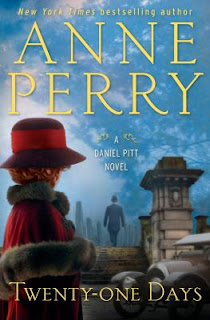
Twenty-one Days

 highland.ent.sirsi.net/client/en_US/default/search/results?qu=9780399179884
Twenty-one Days
(Daniel Pitt #1)
By Anne Perry
Ballantine Books, 2018. Fiction. 303 p.
Daniel Pitt is a young lawyer in London in 1910.  His father was the head of London's Special Police branch and Daniel has inherited some of his father's penchant for detective work.  Right after his first big victory in a murder case, Daniel is thrown into another case, one that is more complicated.  Russell Graves, a singularly nasty fellow, had been found guilty of murdering his wife and then burning her body.  Daniel and a crusty veteran lawyer who is working on the case with him, have just 21 days to find sufficient reason to call for a retrial. As Daniel digs deeper into the evidence, he soon finds that the suspect has underhanded dealing that touch Daniel personally.  Should he continue to investigate, or let the person who is threatening all the thought he knew about his life hang for a crime Daniel is beginning to believe he didn't commit?

Here is the first in a new series by Anne Perry.  This one is more of a courtroom drama than some of the other books by Perry that I have read.  It has a complex plot with a lot of evidence, red herrings, and unexpected twists and turns.  I was impressed that, with all the details Perry introduces as evidence, I didn't really lose track of what was on the table.  She has a way of gently reminding the reader of what has gone on before, without making the story line drag.  This story, as the others I have read by Perry, could be enjoyed by a man or a woman.  It is less gory and cleaner than something by Michael Crichton or James Patterson, but it has enough suspense and thrills that it doesn't feel like a "cozy mystery."

Wednesday, January 29, 2020

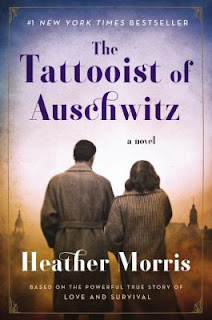
The Tattooist of Auschwitz

highland.ent.sirsi.net/client/en_US/default/search/results?qu=9780062870674

The Tattooist of Auschwitz 
by Heather Morris
Harper Collins, 2018, Fiction, 288 p.
Ludwig (Lale) offers to give himself up to the Nazis in hopes that it will save his family.  He is shipped to Berkenau concentration camp where, by several chance encounters, he becomes the official tattooist, who tattoos the ID numbers on all the prisoners as they enter the camp.  His assignment gives him special privileges which he uses to try to help other prisoners whenever he can.  One prisoner means more to him than all the others, a young woman named Gita. It is his love for her that gives him the courage to try to survive and help her survive as well.

This book was one of the top ten books checked out at the Highland Library last year and that is why I read it even though Holocaust books are always hard for me to read. Though it was hard, I am glad I read it.  It is beautifully written and emotionally powerful.  I actually didn't realize until I read the author's note that it was based on a true story.   It is a great book and I do recommend it but know what you are getting into.  The author doesn't leave much out. There are horrific scenes, though the author has a good sense of how much detail to include.  But harder to read is the sadistic cruelty of many of the guards. Lale's humanity, hope, and love for Gita helps the reader get through the hard parts. This book is available from the Library in print, on CD, as an ebook and e-audiobook.

Saturday, January 25, 2020

Pope Joan

highland.ent.sirsi.net/client/en_US/default/search/results?qu=9780307452368
by Donna Woolfolk Cross
Crown Publishers, 1996, Fiction, 422 p
Joan is born to a tyrannical church leader in 814 Frankland.  Joan has an eager mind and an academic aptitude in a time when women were expected to only keep house and care for children.  She convinces her brother to teach her how to read, and catches the eye of a progressive scholar who teachers her Latin and Greek.  When her brother is killed in a Viking raid, Joan decides to cut her hair and assume her brother's identity so that she can continue her studies at a monastery.  There she learns healing lore and her medical skills eventually lead her to become the physician to the Pope.  Fate further takes her hand and leads her to be elected to the Papacy.

I found this title on our library's "Good Reads" book list and couldn't resist.  It is a fictionalization of a real historical legend that there once was a woman who briefly became Pope.  Many scholars discount the story and the Catholic church denies it, but some scholars argue that there are enough historical clues to make it plausible. The novel has many elements that I really enjoyed.  Joan is a complex and endearingly flawed character.  Her relationship with Gerold is likewise complex and believable. I am fascinated by that time period, which the author  has carefully researched and (in an end note) calls the darkest of the dark ages.  I am a bit of a medieval humanities geek, but I think a lot of people who like historical fiction would enjoy this book.